Numark chair hopes latest pharmacy funding talks include national prescribing service
Neil Trainis,
05 Mar 2026 1 Min
1 Min

Neil Trainis,
05 Mar 20261 Min
Neil Trainis,
05 Mar 20261 Min


Numark chairman Harry McQuillan has said he hopes the Government and Community Pharmacy England will discuss the funding of a national prescribing service during 2026-27 contractual negotiations which has begun in the last few days.
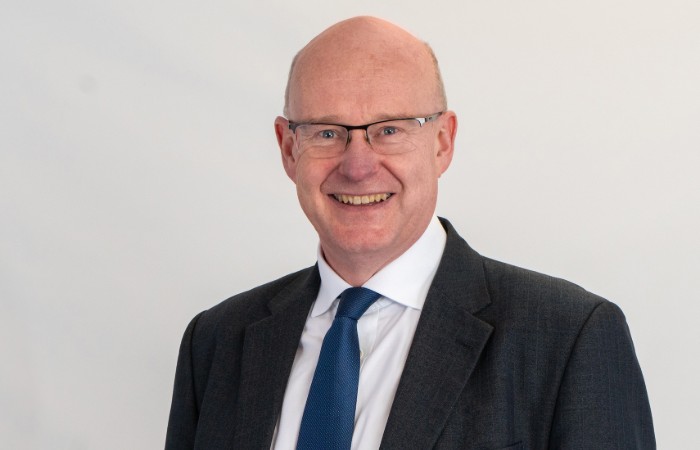
McQuillan (pictured) told Independent Community Pharmacist launching a service in England similar to the pharmacist prescriber-led common clinical conditions service NHS Pharmacy First Plus in Scotland would not only expand pharmacists’ roles but help keep them in community pharmacy amid reports many are disillusioned by increasing workload and unfunded patient consultations.
Last year, the Company Chemists’ Association (CCA) warned community pharmacy’s workforce needed “NHS-led investment” to stop pharmacists leaving the sector and going into GP surgeries and primary care networks.
The CCA warned without proper funding, there will be a shortfall of 16,000 full-time equivalent pharmacists by 2036-37.
NHS prescribing service such as Scotland’s Pharmacy First Plus can help pharmacist retention
“With increased and properly structured funding, community pharmacies could confidently expand their clinical offer,” McQuillan said.
“Services such as hypertension case-finding, contraception provision and Pharmacy First have already demonstrated what is possible when policy intent is matched with operational delivery.
“Expand that to an NHS prescribing service such as Scotland’s Pharmacy First Plus gives further scope for expansion and pharmacist retention. These are not theoretical opportunities; they are proven models.”
McQuillan, who was Community Pharmacy Scotland chief executive for 17 years before joining Numark, insisted the community pharmacy network in England should be funded to manage repeat prescribing and supply.
“In addition, every prevention intervention reduces longer-term cost to the NHS,” he said. “Community pharmacy does not drive demand, it absorbs it. And when it is supported to operate at full potential, the entire health system benefits.
“Every consultation handled in a community pharmacy places us at the heart of care delivery and is capacity released elsewhere. Every urgent supply resolved on the high street is one less avoidable contact with the out of hours service or attendance at A&E.”
It is not publicly known if the 2026-27 talks will focus on a funded national pharmacist prescribing service as the full contents of a letter from the Department of Health and Social Care to CPE just before the start of the negotiations setting out what will be discussed have not been disclosed.
McQuillan said improved funding will have other positive knock-on effects, such as allowing pharmacy owners to invest “properly” in their workforce and premises and create greater scope for protected learning time.
At least consider a multi-year commitment
He also insisted “IT infrastructure must form part of the conversation” between Labour and CPE and “at least consider” a multi-year deal to give contractors more certainty to invest in their pharmacies.
“Integrated IT systems, interoperable access to patient records and consultation-ready clinical environments are no longer aspirational, they are essential for safe, modern care,” he said.
“My hope is these negotiations move beyond short-term settlements and at least consider a multi-year commitment that provides certainty, incentivises quality and rewards clinical impact.
“I have been involved in such settlements in the past and it does deliver the predictability and stability that pharmacy owners need.”